Apps built end to end — scoped, shipped, and still running.
You have a product, a workflow, or a sales motion that needs building from scratch — and no in-house team to build it. We take it from idea to a live app in the store, hand it off clean, and — if you want — run it and market it. Not a freelancer who disappears. Not an agency that bills for a year and shows you a demo.
The problem
Most owners who need an app are stuck between bad options: a freelancer who takes the deposit and goes dark, an agency that bills for a year and ships a demo, or an off-the-shelf tool that almost fits — so your business bends around it. You don't need another contractor. You need a team that owns the outcome from scope to store to growth.
How a build runs, end to end
1 · Scope
A 4-minute questionnaire, a scoping call, and an audit become a written plan. We model running costs before we write code, so you know the economics up front. Fixed fee, four milestones, exclusions written on day one.
2 · Build
A production backend, database, and the integrations you need — against staging and production environments, with automated tests running on every push. Weekly demos; no paid change orders.
3 · Ship
Store submission and review. We clear rejections — on our last marketplace app, Apple bounced the first build and we fixed it and resubmitted the same day.
4 · Hand off clean
Every account in your name from day one, plus runbooks, a Loom walkthrough, and a 30-day warranty. You can run it without us in the room.
5 · Run
An optional managed engineering retainer — uptime, monitoring, patches, and new features one at a time — so the app never goes dark and keeps improving.
6 · Market
A live app isn't a launched app. We can run the go-to-market too: launch sequences, link tracking, app-store listing optimization, and paid acquisition.
Featured build — Indulge Private Chefs
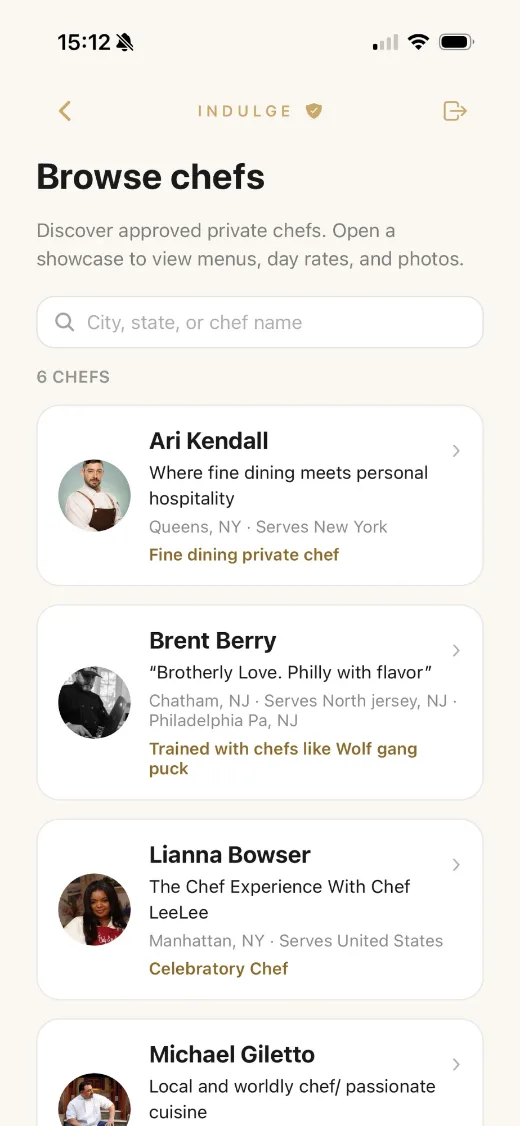
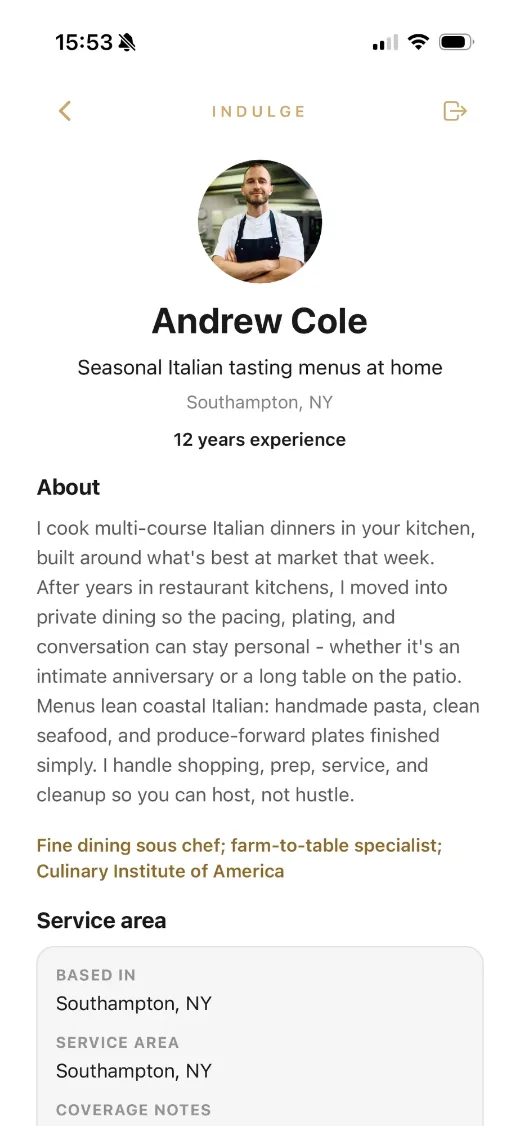
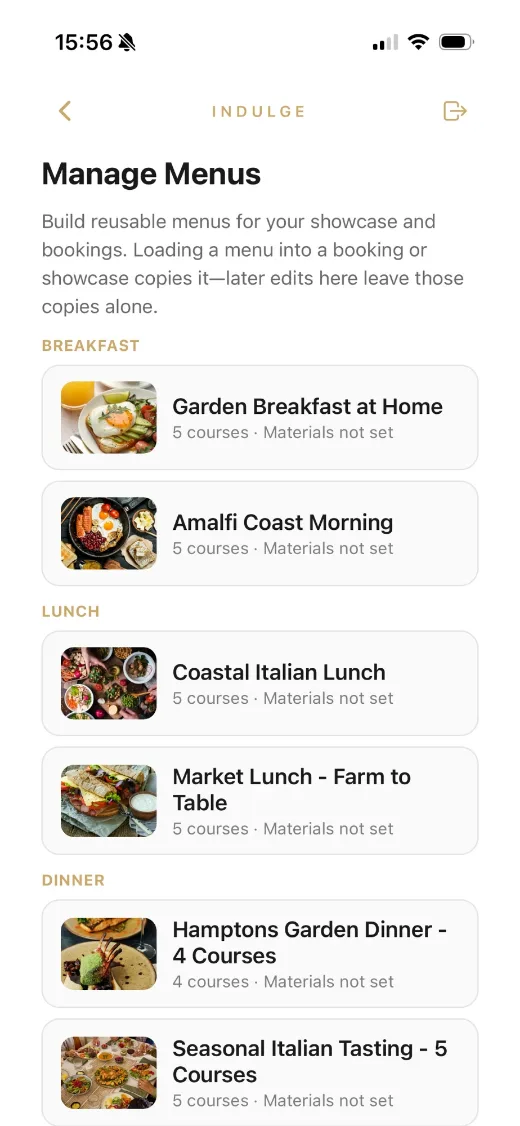
A decade-old private-chef business booked every event by text off the founders' phones. We scoped, built, and shipped a native iPhone marketplace — client, chef, and manager roles, software-enforced chef vetting, in-app booking, and Stripe payout onboarding — live on the App Store about four months after kickoff, fixed fee, no paid change orders. We still run the backend on retainer and drive its go-to-market.
Kickoff to App Store
Fixed fee, four milestones, one Apple rejection fixed the same day.
CI on every push
Staging and production environments; 29 backend functions behind the app.
Client · Chef · Manager
One app, with the quality bar enforced in software.
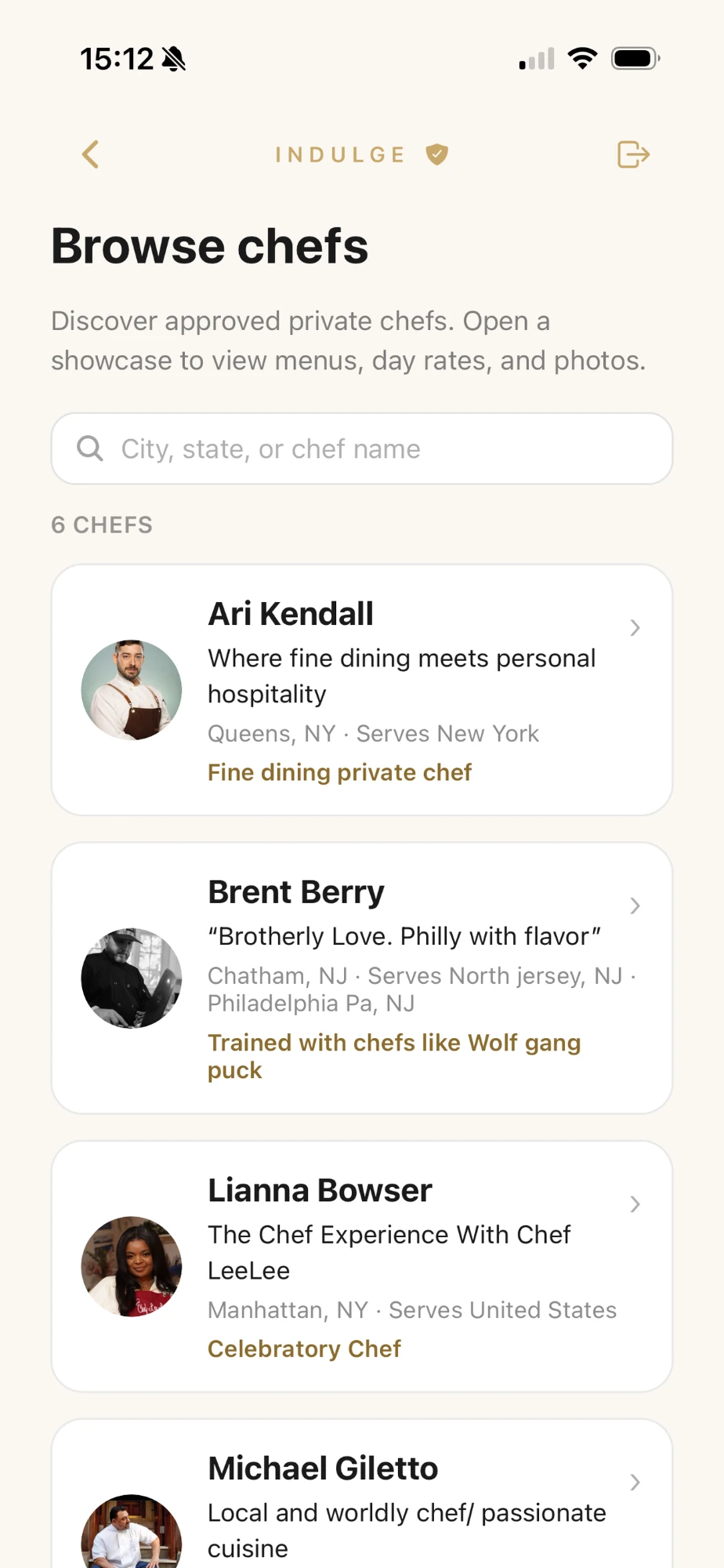
Browse vetted chefs
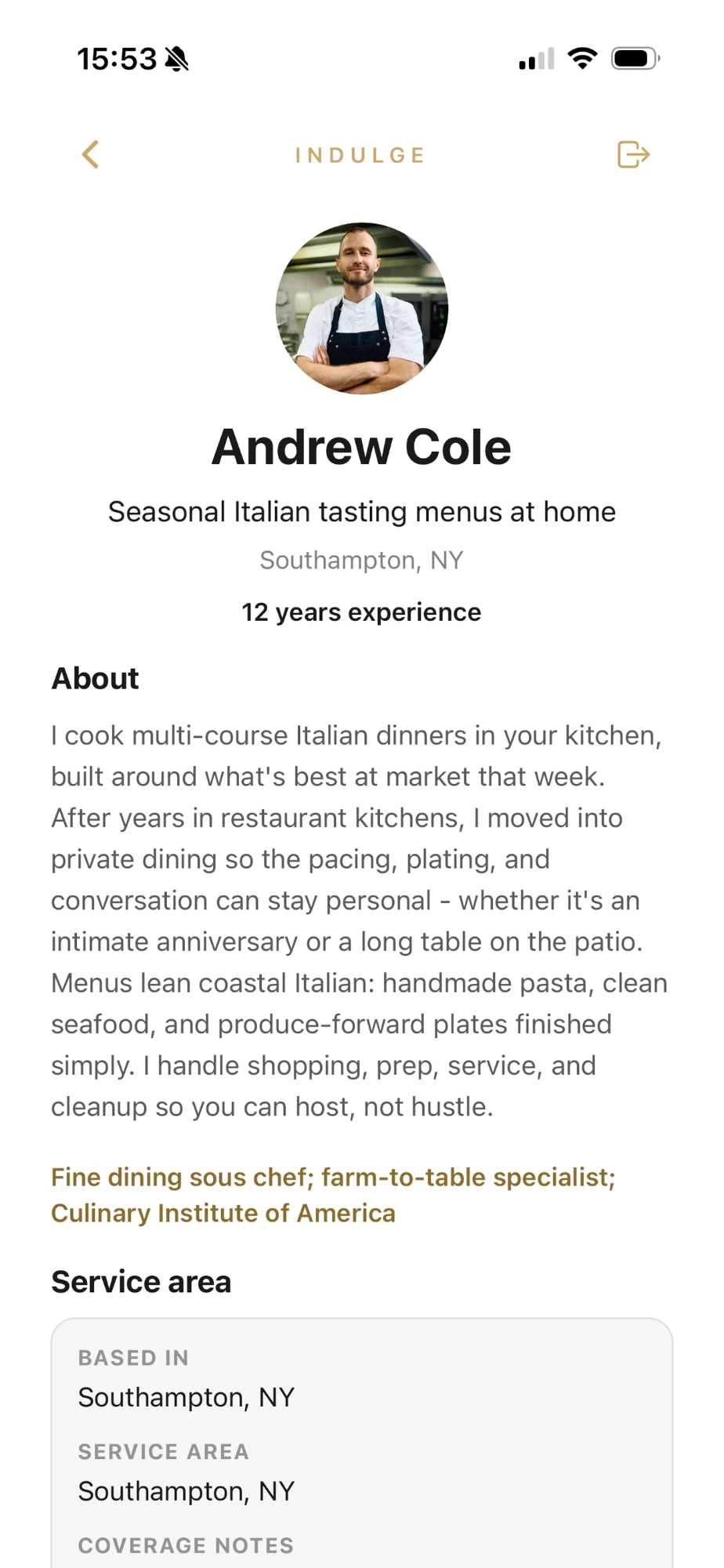
A chef’s showcase
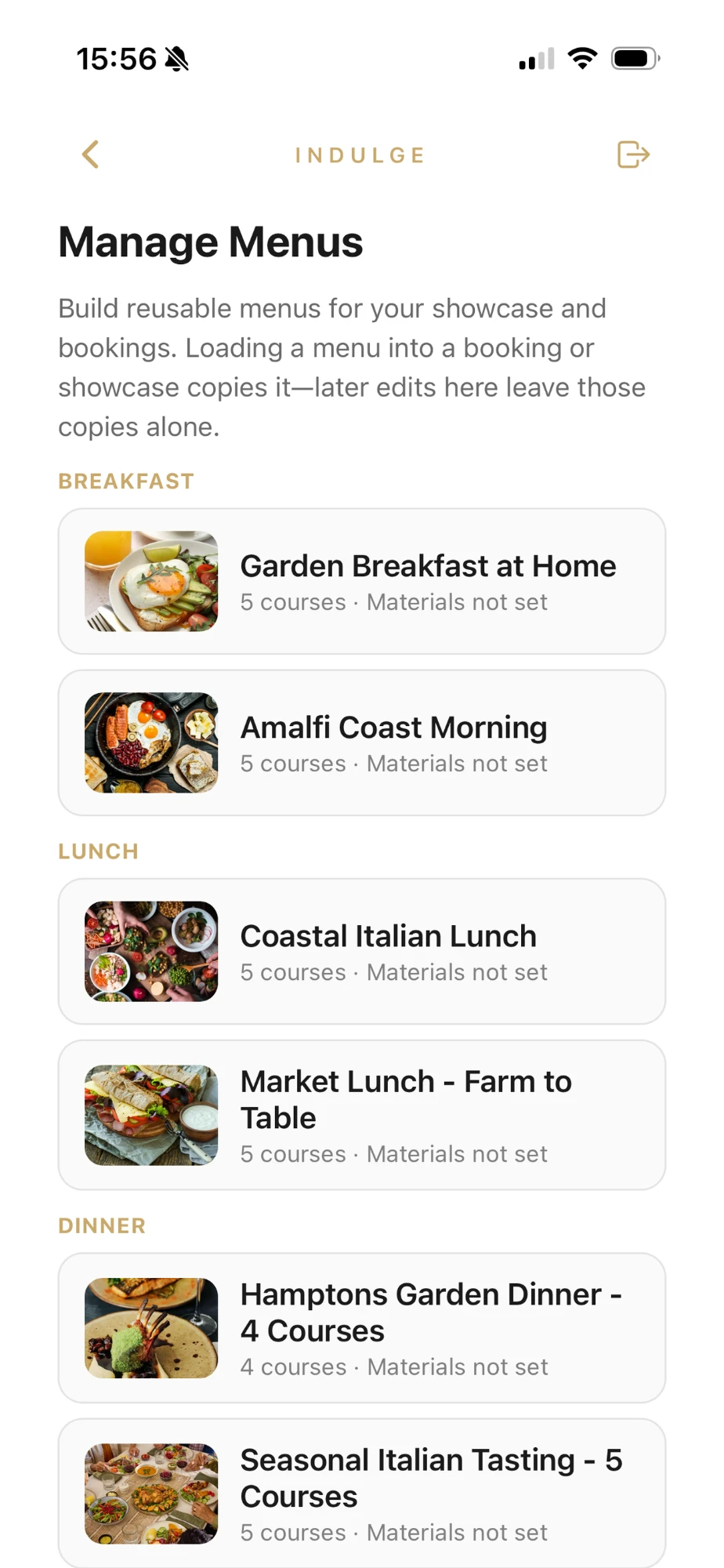
Menus & booking
Read the full case study
How a reputation-run business became a curated marketplace — scope, build, clean handoff, managed retainer, and go-to-market.
Read case →What you walk away with
Not a prototype
A system your customers and team actually use.
Documented and handed off
Runnable without us in the room, with every account in your name.
Phase gates and weekly demos
You always know where the build stands.
- Fewer spreadsheet workarounds and manual daily steps
- Better intake for customers and staff
- Faster team workflows and a cleaner portal experience
- Work happens in one place
Why us specifically
We build and run our own product, Kinaura, now live on the App Store: the backend, the scoring engine and the iPhone app, so we build for real stakes, not just deliverables. Josh owns infrastructure and product architecture (Fortune-500 systems-engineering background); Tal builds the backend and integration layer.
The stack fits the product
Native mobile
Web & SaaS backend
Delivery discipline
When you need this
- You need a net-new product or internal app built from scratch.
- You have a workflow that no off-the-shelf tool fits.
- You need a technical team you do not have in-house.
How this is priced
Fixed fee, fixed scope, written exclusions
Every build is quoted after we have read your answers: a fixed fee against a written scope, with an explicit list of what is not included, so a change is a change order rather than an argument. There are four tiers, from proving an idea through to a platform build. Which one you are in depends on how many platforms, how many kinds of user, and how many systems it has to connect to.
Four minutes of questions will tell you which tier you are in and what would move the price — before anyone calls you.
What happens after launch
Shipping is not the end of a build, and the commonest way one of these goes wrong is an unspoken assumption about who keeps it running. So we settle it before kickoff rather than after.
Your accounts, in your name
Apple Developer, App Store Connect, payments, database, authentication, domain and DNS are all yours from day one. We set them up and we need admin access while we build, but you keep them if we never speak again. Vendor fees are billed to you directly and sit outside the build fee.
Either we run it, or you do
Operating systems update, vendors change their APIs, and small things need fixing. You can take a managed backend retainer — uptime, monitoring, patches and small fixes — or we hand over the accounts, the code and the documentation and you run it with no ongoing fee. Both are real options. An unpriced assumption that we are quietly on call is not.
And we can take it to market
A built app still has to be launched. If you want it, we run the go-to-market on the same stack: a launch sequence, link tracking and attribution, app-store listing optimization, and paid acquisition — so downloads don't depend on luck.
Ready to scope it?
Start with the questions rather than the call. Four minutes, and you will know which tier your build is, what would move the price, and what happens next — in writing, before anyone phones you.